Help us promote Lemnos' link to Anzac - Make a donation now

Our Committee is raising funds to create a lasting legacy telling the story of Lemnos' link to Gallipoli and Australia's Anzac story. Our projects include the Lemnos Gallipoli Memorial in Albert Park, the publication of a major new historical and pictorial publication and more. To make a donation you can also deposit directly by direct debit into the Committee's bank account: Account Name: Lemnos Gallipoli Commemorative Committee Inc; Bank: Bendigo Bank; Account No: 188010037; BSB No: 633000; Include your surname in the reference section. For further information on our legacy projects or to make a donation please contact either Lee Tarlamis 0411553009 or Jim Claven 0409402388M

Friday, 5 February 2016

The Lost Anzac Photos of Lemnos and Tobruk - Major Donation of Unseen Anzac Photos and Memorabilia to Melbourne's State Library


Representatives of Melbourne’s Greek community – Cr Jim Grivakostopoulos, Mr Paul Mavroudis, Mr Bill Papastergiadis, Mr Paul Sougleris and Mr Tony Tsourdalakis – viewing the amazing collection of photographs and memorabilia donated by the two Anzac families, including Evelyn’s unique photos of Lemnos in 1915. Photo Jim Claven 2016
Hundreds of original photographs taken and collected by two Anzac’s whose combined service stretches across Australia’s involvement in both the First and Second World War’s were today donated to the State Library of Victoria.

Dr Kevin Molloy, Collections Manager of the State Library of Victoria, accepting the donation on behalf of the Library. Photo Jim Claven 2016

Mr Gil Easton, WW2 veteran and donor, addresses the event. Seated next to him is Mr Bill Rudd, another veteran of the battle of El Alamein. Seated at left is Ms Judith Gunnarson and other members of the Evelyn Hutt family, Mr Bill and Ms Deb Stewart, Evelyn’s grand children. Photo Jim Claven 2016
The donations bring to the public photographs never before seen by researchers and the wider public. The collections were received by Dr Kevin Molloy, Manuscripts Collection Manager, on behalf of the State Library of Victoria. The donors have been assisted in making their donations by historian and freelance writer, Mr Jim Claven, Secretary of the Lemnos Gallipoli Commemorative Committee.
The donation took place in the Collections Centre of the State Library of Victoria. This historic handover of precious Anzac photographic records and memorabilia was well witnessed. Those present were:
    • Evelyn’s family – daughter Judith Gunnarson, grand-daughter Deb Stewart (who is also a member of our Committee executive) and grandson Bill Stewart
    • Gil Easton and his wife Lucia
    • Mr Bill Rudd, Anzac WW2 veteran, who served in the Middle East including the battle of El Alamein where Gil Easton also served.
    • Mr Lee Tarlamis & Ms Christina Despoteris (the President and Vice-President of the Lemnos Gallipoli Commemorative Committee)
    • Ms Arlene Bennett (Nurses Memorial Centre and who is also a member of our Committee executive).
    • Representatives of Melbourne’s Greek community, including Mr Bill Papastergiadis (President of Greek Orthodox Community of Victoria and Melbourne), Mr Paul Mavroudis (President, Thessaloniki Association "The White Tower"), Mr Tony Tsourdalakis (Secretary, Pancretan Association of Melbourne & Secretary, Melbourne-based Battle of Crete and Greece Commemorative Council), Mr Paul Sougleris and Mr Jim Grivakostopoulos (Messinian Brotherhood).

      The Sister Evelyn Hutt's Collection
      The first collection contains over 300 hundreds of photographs and postcards collected by Australian Sister Evelyn Hutt who served across various fronts in the First World War – from Lemnos and the Gallipoli campaign, Egypt, Western France, England and Italy. The collection cover her service in Egypt, Malta, Gibraltar and England.
      Photographs and albums from the Evelyn Hutt Collection. Photo Jim Claven 2016
      Most significantly Evelyn’s collection includes approximately 75 photographs taken during her stay on Lemnos, the Island in the northern Aegean that was the forward base for the Gallipoli campaign in 1915.
      Often forgotten in the story of Gallipoli, Lemnos was the assembly and training base, the forward supply base, the base for forward medical services, where Allied forces returned for rest and after the evacuation of the peninsula, and the location of over 1,200 Allied war graves.
      Sister Evelyn Hutt. Evelyn Hutt Collection.
      Evelyn’s photographs are a great addition to the Australian archive of Lemnos’ role in Gallipoli.
      Lemnos 1915. Evelyn Hutt Collection.
      Highlights in the collection include images of the field hospitals and the Anzac rest camp on Lemnos, revealing the rudimentary accommodation and diggers on hired donkeys travelling over the Island – probably going to the famous hot springs baths at Therma.
      The Sarpi camp itself, diggers wading in the waters of Lemnos’ Mudros Bay and barges full of troops in the waters of Mudros Bay – as well as the field bakeries and kitchens that fed the nurses and diggers on the Island.
      Lemnos 1915. Evelyn Hutt Collection.
      Lemnos 1915. Evelyn Hutt Collection.
      The great water distilling and pumping station erected on the peninsula, not far from Evelyn’s hospital.
      Local life, revealing women and children outside their homes, farmers ploughing fields, village women at Portianou and visiting the Australian hospital, the Island’s windmills and the ornately decorated interiors of an Greek Orthodox church. One photograph shows a nurse and soldier conversing with a local Lemnian woman and her child, at the foot of one of Lemnos’ famous windmills (reproduced below).
      Lemnos 1915. Evelyn Hutt Collection.
      Along with the photographic collection, the donation includes many items of Evelyn’s memorabilia including a Turkish soldier’s flag and small Koran, as well as a Peruvian coin, the gift of a dying soldier on Lemnos, worn by Evelyn as a brooch for years afterwards in his memory. Also included is a gift from US sailors of a signed US Flag in celebration of Armistice Day 1918 while Evelyn was in Genoa.
      Some of the memorabilia from the Evelyn Hutt Collection. Photo Jim Claven 2016
      Evelyn’s collection has been donated by her daughter, Ms Judith Gunnarsson, supported by Evelyn’s granddaughter Ms Deb Stewart and grandson Mr Bill Stewart. Judith stated that she was glad that the collection would be preserved by the State Library and be made available to a wider public.

      Mr Bill Papastergiadis, Mr Paul Sougleris and Mr Tony Tsourdalakis viewing the amazing collection of photographs and memorabilia donated by the two Anzac families, including Evelyn’s unique photos of Lemnos in 1915. Photo Jim Claven 2016

      Cr Jim Grivakostopoulos, with Ms Judith Gunnarsson, admires the Peruvian coin brooch given to Sister Evelyn Hutt by a dying digger on Lemnos or in Egypt in the First World War.  Photo Jim Claven 2016


      Mr Tony Tsourdalakis and others viewing Evelyn’s WW1 map of the Balkans, including Greece. In the centre is Dr Kevin Molloy, Collections Manager of the State Library of Victoria. Also present Mr Lee Tarlamis, President of the Lemnos Gallipoli Commemorative Committee. Photo Jim Claven 2016


      Cr Jim Grivakostopoulos viewing Evelyn Hutt’s photographic collection of Lemnos in 1915. Photo Jim Claven 2016
      The Private Gil Easton Collection
      The second collection contains over 140 photographs taken by Private Gilwyn (or Gill) Easton during his service in the Middle East in the Second World War. Gill served as part of the Australian forces who defended Tobruk – a siege that lasted 242 days and witnessed some of the most intense fighting of the war - and took part in the great battle of Alamein, which saw the turn of the tide of the war in the Middle East.
      Gill’s original photographs expand the visual memory of these great chapters in Australia’s Anzac story.
      Private Gil Easton. Gil Easton Collection.

      Highlights of Gill’s photographic collection are images depicting the siege of Tobruk, recording the ordinary life of the digger during war, some of anxious preparations, the reality of warfare and others of relaxation and camaraderie.
      Church at Tobruk, during the siege. Gil Easton Collection.

        Gil Easton Collection.

      Gil Easton Collection.

      Downed German plane. Gil Easton Collection.

      Gil Easton Collection.
      Egypt, Palestine and Syria during their periods of leave and recuperation in Palestine and Syria, recording the ordinary life on the streets of Cairo, Tel Aviv and Tripoli. They show the streetscapes of wartime Tel Aviv, Gaza beach surf carnival, the races at Heliopolis, a tour of the Cairo Zoo and buying a newspaper at Tel Aviv’s Ned Kelly newspaper stand.
      Gaza - Anzac Surf Carnival. Gil Easton Collection.

      Tel Aviv. Gil Easton Collection.
      And finally, there are photographs of the preparations for the coming battle of El Alamein – a battle that would turn the tide in the Middle East. Most importantly the photographs record a number of Gill’s fellow Anzac’s and relatives who also served with him in the Middle East.
      Gil's unit with mascot, prior to the battle of El Alamein. Gil Easton Collection.

      Mr Paul Mavroudis, Ms Christina Despoteris and Dr Kevin Molloy listen to Mr Gil Easton explaining his collection. Photo Jim Claven 2016

      Two WW2 diggers together - Mr Bill Rudd and Mr Gil Easton  - both veterans of the Middle East and El Alamein - review the collections. Photo Jim Claven 2016


      Mr Gill Easton, Ms Judith Gunnarsson and Mr Bill Rudd. Photo Jim Claven 2016.
       "I hope that these photographs will be of use to researchers and the descendants of the diggers that I served with all those years ago. Thanks to the State Library of Victoria for accepting the responsibility of preserving them for future generations”, Mr Easton said.
      Mr Jim Claven said that it had been a privilege to have come to know Judith, Deb and Gill and to have assisted them in making this historic donation to the Victorian public.
      "The images of Lemnos and those Tobruk captured in these collections are stunning and unique. The record the life of our Anzac volunteers in vivid images across both World Wars. They will be an invaluable addition to our national estate.”

      Mr Jim Claven describes the importance of the Anzac collections of Sister Evelyn Hutt and Mr Gil Easton. Photo Lee Tarlamis 2016.

      He added that both donors hope that their actions will prompt others to consider donating similar collections to the State Library of Victoria or other similar public institutions.
      “These photographs are an important part of our shared history. They bring to life major events in our past and record the experiences of ordinary Australians as they took part in these titanic struggles across two world wars. Most importantly, they serve to remind us of those who did not return and paid the ultimate sacrifice, some of whom are recorded in the images donated today.”


      Mr Bill Papastergiadis, President of the Greek Orthodox Community of Melbourne and Victoria, addresses the donor families and their guests. Photo Jim Claven 2016

      The donations were witnessed by representatives of Melbourne’s Greek community. Mr Bill Papastergiadis, President of Greek Orthodox Community of Victoria and Melbourne, said that it was an honour to witness the donation of these important photographs.
      “Both preserving and bringing to the public collections such as these commemorate the Hellenic link to Anzac. Looking at these photographs reinforces the strong links between Australia and Greece – going all the way back to when Australian soldiers and nurses walked the shores and village streets of Greece in 1915.”
      “The story of the relationship between Greece and Australia has often been characterized solely on the migration of Greeks to Australia following the Second World War. Rather, it is a deep and complex story with many threads that united these two countries. It is this complex history and shared values and aspirations that have helped forge such a strong bond between the two countries. In my view, Australia and Greece are inextricably linked and using an Australian expression, the two countries are “best mates””.

      Mr Bill Papastergiadis, President of the Greek Orthodox Community of Melbourne and Victoria, addresses the donor families and their guests. Photo Jim Claven 2016
      Also present were Mr Paul Mavroudis, President of the Thessaloniki Association “the White Tower”, and Mr Tony Tsourdalakis, President of the Pancretan Association of Melbourne. Both congratulated both families for making this donation, Tony adding:
      “This year is the 75th anniversary of the Battle of Crete and Greece. I am sure that there are many similar collections lying on old boxes or in sheds, in danger of being lost. I urge everyone with an Anzac in their family to check if there are photographs or other records and memorabilia in need of preservation.”
      The Sister Evelyn Hutt family, with Ms Arlene Bennett (second from left) and Mr Lee Tarlamis (right). Photo Jim Claven 2016
      Mr Lee Tarlamis and Ms Christina Despoteris, President and Vice-President of the Lemnos Gallipoli Commemorative Committee, added that it was pleasing that the work of the Committee had brought to light these amazing historic collections. They hoped that more donations would flow into our public institutions to preserve these vital documents of the Hellenic link to Anzac.
      Mr Claven is also Secretary of the Lemnos Gallipoli Commemorative Committee which last year erected a major new Memorial Statue in Melbourne’s Albert Park to Lemnos’ role in the Gallipoli campaign. He is currently writing a major new commemorative publication on Lemnos and Gallipoli.


      The family of Sister Evelyn Hutt – Ms Judith Gunnarsson, Mr Bill and Ms Deb Stewart, completes the formal donation of Evelyn’s collection to the State Library of Victoria. Dr Kevin Molloy of the State Library of Victoria at right. Photo Jim Claven 2016.

      Mr Gil Easton completes the formal donation of his WW2 photographic collection to the State Library of Victoria. Dr Kevin Molloy of the State Library of Victoria at left. Photo Jim Claven 2016.


      Mr Jim Claven, Ms Arlene Bennett of the Nurses Memorial Centre and the family of Sister Evelyn Hutt – Deb Stewart (granddaughter), Ms Judith Gunnarsson (daughter) and Mr Bill Stewart (grandson). Photo Jim Claven 2016

      Posted by Jim Claven
      Secretary
      Lemnos Gallipoli Commemorative Committee

      Thursday, 4 February 2016

      Victorian Students to Tour Lemnos - 2016 Premiers Spirit of Anzac Student Prize Winners Announced

      Our President, Lee Tarlamis, Vice President Christina Despoteris, Anzac Prize winner Spencer Glenfield from Albert Park College and myself. Photo Jim Claven 2016
      On 3rd Febuary, the winners of this years Victorian Premier's Spirit of Anzac Student Prize were announced by the Hon John Eren, MP, Minister for Veterans.
      The Minister spoke movingly of his participation in the Centenary services at Gallipoli last year.
      I had the pleasure, along with Lee Tarlamis and Christina Despoteris, our President and Vice-President, to be invited to attend this announcement.
      Also present were our Committee Patron, Lambis Englezos, Committee member, Steve Kyritsis, also of the RSL Hellenic Sub-Branch.
      Lemnos
      As with the last two years, this years overseas tour winners will again walk in the footsteps of the Anzacs - soldiers and nurses - on Lemnos. In 2013 Monash University's Professor Bruce Scates and myself lobbied for Lemnos to be included in future Gallipoli tours. This was agreed and in 2104 at the request of the Victorian Veteran's Unit I made a presentation detailing the Lemnos link to Anzac to the student tour group at RSL House in Melbourne. It is great to see that the inclusion of Lemnos is continuing.
      Minister for Veterans, the Hon John Eren, one of the Anzac Prize winners and Sharon Knight MP, Victorian Anzac Centenary Committee. Photo Jim Claven 2016
      As the Media Release states:
      "The Premier’s Spirit of Anzac Prize tour group will follow in the footsteps of our World War I veterans as they visit places of national significance at Lemnos, Gallipoli and the Western Front. The 2016 tour is a unique chance for Year 10 and 11 students to reflect on the spirit of the Australians who gave their lives for their country."
      The Victorian Government has expanded the number of places for students selected for the overseas tour from 12 to 22. A further 20 students have been selected to visit Canberra and the Australian War Memorial.
      Albert Park College Student Selected for the Tour
      One of the winners of the overseas tour was Spencer Glenfield of Albert Park College - where our Lemnos Gallipoli Memorial is located. You will remember that the College participated in our Memorial launch last year.
      A Visit to the Lemnos Gallipoli Memorial?
      Christina discussed with a number of the winners and their schools of the possibility of their visiting our Lemnos Gallipoli Memorial before they leave for Lemnos and Gallipoli in March 2016. What a great idea for these students to see the Memorial in Melbourne and then to visit Lemnos itself, and to tell the people of Lemnos of the Memorial to their Island and its connection to Gallipoli all the way back in Melbourne.
      Well done Christina for proposing this initiative and opportunity for the students - hopefully this will occurr and become and annual event.
      Discussions will be had with the Victorian Veterans Unit and school participants to see if this can occur.
      Our Committee Patron Lambis Englezos, Cr Wayne Smith (and one of the teachers who assess the student's efforts), Vice President Christina Despoteris, Spencer Glenfield of Albert Park College and Lee Tarlamis, our Committee President. Photo Jim Claven 2016.

      Some of the Spirit of Anzac Student Prize winners. Photo Jim Claven 2016
      To read the Minister's Press Release, please click here.
      Jim Claven 
      Secretary
      Lemnos Gallipoli Commemorative Committee

      Tuesday, 26 January 2016

      Imbros and Tenedos - The other "forgotten" Island's of the Gallipoli campaign


      Tenedos Island, April 2015. Photo Jim Claven 2015

      Lemnos was the main forward base for the Gallipoli campaign, bringing tens of thousands of Allied troops and hundreds of ships to this beautiful Island in Greece's northern Aegean.
      Researching the role of Lemnos and having been fortunate to have visit the Island over recent years has only strengthened my resolve to tell the story of Lemnos and Gallipoli - and especially for the over1,200 Allied soldiers, sailors and airmen (as well Egyptian labourers and Turkish POW's) who lie buried there in its three war cemeteries.


      Lemnos, Imbros and Tenedos, 1915. AWM

      Last year, in April 2015, prior to Anzac Day, I fulfilled a long held dream of visiting the other northern Aegean Islands that played an important role in the Gallipoli campaign - Imbros and Tenedos. Accompanying me was my friend Chris Mingos, one of our Committee members and whose father hailed from from the former Greek community of Asia Minor, the village of Reisdere on the Chesme peninsula opposite Chios.
      Overwhelmingly Greece populated, these two Islands had been joined to Greece in 1912 during the Balkan Wars. Both Island's were critical in their own way to the whole Gallipoli campaign.
      Although Lemnos' great and safe harbour of Mudros ensured its primacy as the forward supply and hospital base for Gallipoli, Imbros and Tenedos in their own ways were brought into the Gallipoli campaign's in 1915. Greece offered all three Island's to the Allies as bases for the coming Gallipoli campaign.
      Standing at the entrance to the Dardanelles, Imbros and Tenedos - along with nearby Lemnos - have a long history stretching back to the era of Greek mythology and legend, from Homer and beyond. The Islands were part of the Greek settlements that sprang up along the Asia Minor coast as Greek sailors and traders spread out from the Greek heartland.


      Imbros Island, April 2015. Photo Jim Claven 2015

      Imbros
      Imbros was the location of Allied commander General Hamilton's headquarters, the rendeavous point for Anzac troops as they sailed from Lemnos to Anzac Cove and the where the Allied war correspondents were based. Imbros' Kephalos Bay saw Allied ships anchor as they sailed to and from Gallipoli, Lemnos and Egypt.


      The Allied Base on the shores of Imbros' Kephalos Bay, 1915. AWM

      For Australians, it also was the location of the 1st Australian Field Bakery that supplied fresh bread to the diggers on the peninsula, transported by the wagons of the Australian Army Service Corps. One wonders if they also made lamingtons or scones! 25th Casualty Clearing Station commanded by Lieutenant Colonel Mackenzie was based here, as was the 1st Australian Field Artillery Battery temporarily.
      Photographs of Australian war correspondents Charles Bean and Philip Schuler walking on Imbros and photographing its Byzantine fortresses lie in the Australian War Memorial.
      And as the war drew to a close the waters off Imbros saw the last great naval battle of the war in the Middle East - the naval battle of Imbros.


      Byzantine Ruins, Imbros, 1915. AWM 


      Byzantine Ruins, Imbros, 2015. Photo Jim Claven 2015

      Tenedos
      Tenedos was occupied by the Allies along with Imbros and Lemnos. The Allied naval commanders, first Admiral de Roebeck and then Admiral Carden,were often based atTenedos, holding many conferences there. The base for an important Allied airbase for the Captain Samson and the Royal Naval Air Service that flew reconnaissance and bombing raids over Gallipoli, Tenedos remained an Allied base until the end of the First World War, as was Lemnos and Imbros.


      Local Tenedos residents greet Venzelos in Tenedos harbour, 1915. IWM

      The great Greek leader Venezelos visited Tenedos in 1915 to the cheers of the local population.
      Allied soldiers would recall Tenedos’ part in Greek history and myth when they came in 1915. A statue of the goddess Aphrodite was unearthed by an Allied soldier when digging a trench. One wrote of “Tenedos, dear of old Apollo” and that Homer’s snakes had been replaced 3,000 years later by anti-submarine cables.And it was from Tenedos that Allied Commander Sir Ian Hamilton issued in May his statement praising the “audacity” and valour” of the Anzacs at Gallipoli.


      Captain Samson of the Royal Naval Air Service on Tenedos, 1915. IWM

      Neos Kosmos Articles
      Over the past few weeks Australia's Neos Kosmos has published two articles tyhat I have wirtten followinf my research visits to Imbros and Tenedos. If you missed these publications, you can view them by clicking the links below.
      To read my article on Imbros - A Voyage to Imbros - click here.
      To read my article on Tenedos - To Tenedos they came: Palm Sunday on Tenedos - click here.
      Thanks to Neos Kosmos for publishing my stories and bringing them to wider audience.

      Modern Imbros and Tenedos
      It was a pleasure to visit both Imbros and Tenedos and to walk in the footsteps of those Anzac and other Allied soldiers, sailors and airmen who made them there whom for the months of the Gallipoli campaign. It was great to be welcomed by the locals, especially the remaining Greek population of both Islands.
      While the exempt from the population exchanges that followed the Greco-Turkish war of the early 1920's, the Greek population of both Island's has dwindled, especially since the 1960's and 1970's, many former residents making their new homes in Greece and beyond, including Australia.
      Anyone who visits the Islands on an Anzac pilgrimage will be rewarded by a visit to these villages - to the Byzantine ruins of Imbros, the classical remains on Tenedos, the village of Aya Theodoros at its Nostos Cafe on Imbros and the main Church in Tenedos town.


      Lemnos viewed from Imbros. Photo Jim Claven 2015


      The Essential Gallipoli Tour - Lemnos, Imbros, Tenedos and Gallipoli

      I encourage all those who visit Gallipoli to make a little more effort and travel to Imbros and Tenedos - as well as Lemnos - and have a coffee in the Nostos Cafe or a tsipouro in the villages of Tenedos!
      Your pilgrimage will honour the Allied soldiers, sailors and airmen who came there in 1915, walking in their streets and villages, befriending the locals, enjoying their hospitality and some remaining buried on Lemnos' war cemeteries or in the waters surrounding these beautiful Islands in the northern Aegean. As you sail around the Islands, you will feel the winds and warming sunlight that the Anzac's wrought about all those years ago and you will approach Gallipoli as the Anzac's did - by sea, from the Islands of Lemnos, Imbros and Tenedos.
      Thanks to all who encouraged me to travel to these often "forgotten" Gallipoli campaign Islands, including Sophie Arvanitou from Melbourne's Tenedos community.

      Jim Claven
      Secretary
      Lemnos Gallipoli Commemorative Committee


      Sunday, 24 January 2016

      Robert Burns, Scotch Whisky and Gallipoli - Hugo Throssell and his dram at the Nek


      View from Walkers Ridge Cemetery. In 1915 Anzac Hugo Throssell shared a whisky near here. Photo Jim Claven 2015
      Today is the 25th January - the anniversary of Scotland's famous bard, Robert Burns. Many Scots and Burns fans will celebrate his birth at Burns Nights across the world - often enjoying a glass of Scotland's just as famous Whisky.
      Burns is celebrated as Scotland's national poet, a writer of great love poetry but also of the common man, many of his poems written in the vernacular. One of his most famous is "Is there for honest poverty" commonly referred to as "A Man's A Man for A' That", a celebration of the equality of man, its final lines ending:
      "...
      For a' that, an' a' that,
      It's comin yet for a' that
      That man to man, the world o'er,
      Shall brithers be for a' that.
      ..."

      Scotland and the Anzacs Scotland and its culture were well represented amongst the Anzac's. The connection between the Anzacs and Scotland and its culture. Tens of thousands of Anzacs were of Scottish birth or heritage. As an example, Colonel Richard Linton who died as a result of the torpedoing of the troopship Southland off Lemnos and is buried at East Mudros, was born in Dalton, Scotland. And Ned Herring who would serve in both World 
      A Dram Before the Charge at the Nek
      Here an Australian officer, who would be awarded the VC at Gallipoli, drank Scotch Whisky with his comrades to steady their nerves the evening before the terrible assault at the Nek at Gallipoli in August 1915. Another connection is that this particular officer would no doubt have appreciated the words of Burns famous poem cited above.


      Lieutenant Hugo Throssell VC. AWM
      On the evening prior to the well-known charge of the Australian Light Horse at the Nek (the evening of the 6th August 1915), Lieutenant Hugo Throssel "borrowed" a bottle of Scotch Whisky from Major Tom Todd's dugout. He arranged to meet a few of his fellow 10th Australian Light Horse comrades on the cliff overlooking Anzac Cove.
      As the author John Hamilton quotes from a newspaper report of the event:
      "It was ... the first occasion during his lifetime on which he had taken strong drink. they knew that in the morning they had to make a bayonet charge and he thought that something was needed to steady the their nerves."
      Hamilton records that Hugo and his mates moved to a spot on the cliff at Walker's Ridge and opened the whisky:
      "They yarned together about their school days together until midnight, as they passed the bottle around ... At midnight they shook hands all round and wished one another luck."
      Hugo was not a whisky drinker and did not like strong drink. Yet when he wanted to share a few moments of camaraderie with his men before the terrible attack that would come only hours ahead - a chose a Scotch Whisky.
      The next morning the Western Australian men of the 10th Battalion would take part in the charge at the Nek. Hugo and many of his company managed to survive the murderous assault on the Turkish lines.
      During the later action as Hill 60 on 29-30 August, Hugo performed the valorous deeds for which he was awarded the Victoria Cross. He was the only Australian light horseman to be so decorated during the Great War.

      Men of the 10th Australian Light Horse, the day after the charge at the Nek. Walkers Ridge, Gallipoli, 1915. AWM
      The Cemetery at the Nek today. Photo Jim Claven 2015.
      Hugo Throssell After Gallipoli
      Hugo served in France and survived the First World War, although his brother who also served would not. He was promoted to Captain. He married the Australian author Katherine Susannah Pritchard, having met her while convalescing in England during the war. He would be a passionate anti-war advocate after the war. Invited to address his local Peace Day Parade at Northam in July 1919 - commemorating the signing of the peace treaty with Germany - Hugo publicly declared his opposition to war and that "war had made him a socialist." Harassed by Australian authorities after the war due to his views, Hugo tragically shot himself with his service revolver in 1933.
      Hugo's family sold his VC in 1984, the medal going to the Australian War Memorial and the funds raised being awarded to the People for Nuclear Disarmament, in respect to Hugo's commitment to peace.

      For more on the great Hugo Throssell VC, see John Hamilton's excellent book - The Price of Valour: The triumph and tragedy of a Gallipoli Hero, Hugo Throssell, VC - published by Macmillan, 2012.
      For two reviews of this book, click here and here.
      for the full poem "Is there for honest poverty" by Robert Burns, click here.
      Below are images of bottles of Scotch Whisky from the era of WW1:


      So if you are commemorating Burns today, spare a thought for Hugo Throssell and his comrades enjoying a Whisky on the eve of the dreadful charge at the Nek.
      Rum, Gallipoli and Egypt
      Anzac and other Allied soldiers were served a rum ration at Gallipoli. Rum flagons have been found during recent archaeological surveys. These are marked SRD - Service Ration Department.
      Rum Ration bottle.
      As the Allies evacuated Gallipoli destroyed those stores that they were not taking - including some Rum rations seen in the photograph taken on 17th December 1915.
      Anzacs destroying rum cases, Anzac Cove, December 1915. AWM
      Alcohol of course was available to diggers in Egypt. The photo below shows an old White Horse Scotch Whisky ad on a wall in Cairo, photographed in 1918 and held in the Australian War Memorial.
      Jim Claven
      Secretary
      Lemnos Gallipoli Commemorative Committee


      Sunday, 17 January 2016

      Brighton's Colonel Richard Linton Remembered

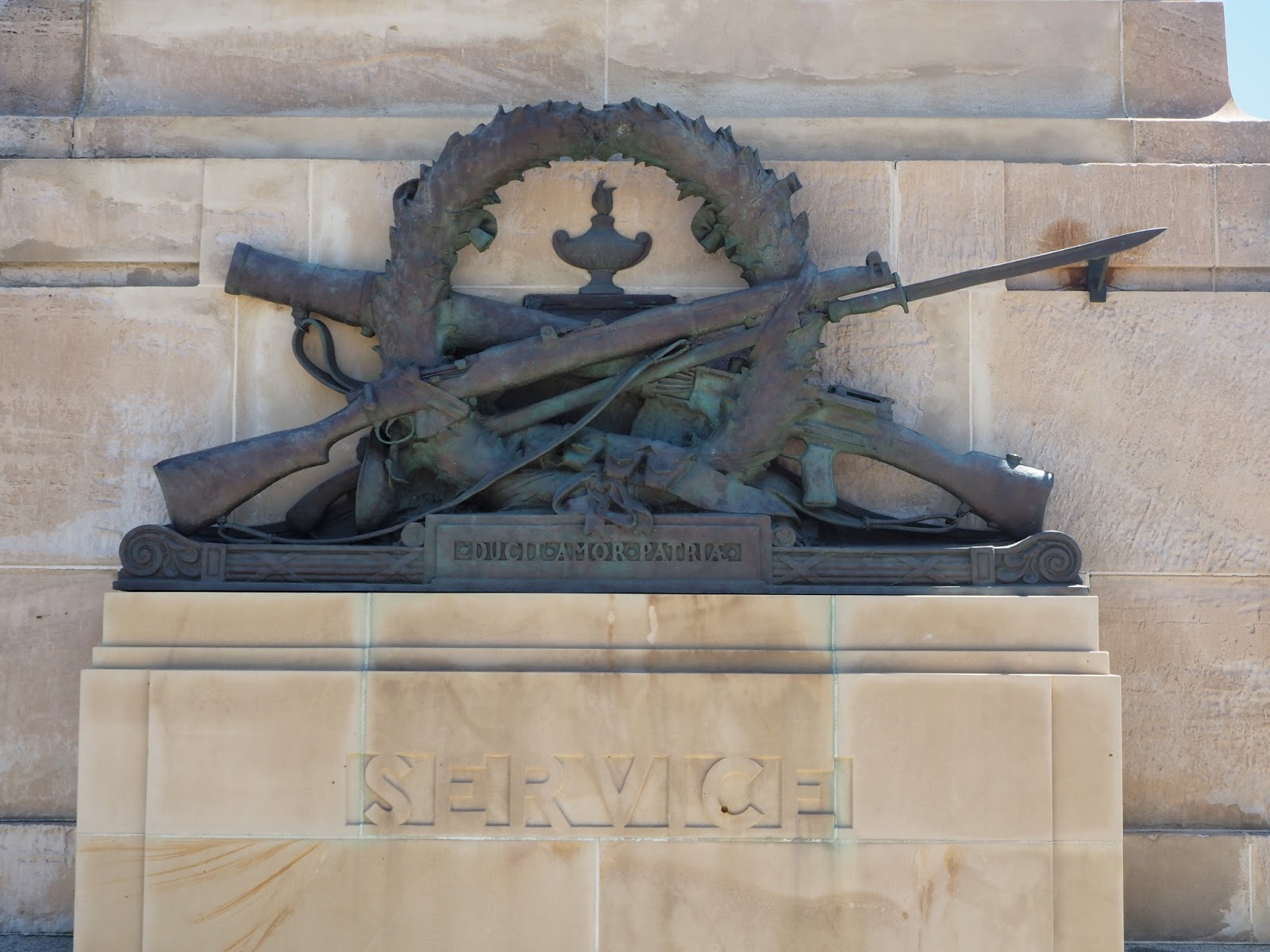
      Bayside War Memorial, Green Point Brighton. Photo Jim Claven 2015

      Recently, I had the pleasure of visiting the magnificent Anzac War Memorial at Green Point, Brighton.
      The Memorial sits atop the shore line of Melbourne's Port Philip Bay. It commands excellent views.
      The Memorial contains the name of one of Brighton's famous Anzacs - Colonel Richard Linton.
      Commander of the 6th Brigade in 1915, Richard had been born in Dalton, Scotland. His home in Brighton was named "Dalton" in his birthplace's honour. His home is part of the Bayside City Council's Ostend Historical trail (click here for more details).
      He died as a result of the torpedoing of the transport ship, Southland, off Lemnos. He never got to command the brigade at Gallipoli. He was buried on Lemnos, at East Mudros Military Cemetery.
      Bayside War Memorial, Green Point Brighton. Photo Jim Claven 2015

      Bayside War Memorial, Green Point Brighton. Photo Jim Claven 2015

      Melbourne's Port Phillip Bay, from Green Point, Brighton. Photo Jim Claven 2015


      Melbourne's Port Phillip Bay, from Green Point, Brighton. Photo Jim Claven 2015
      It is fitting that his name is memorialized above the beaches of Port Phillip Bay - a reminder of the great Mudros Bay at Lemnos, near whose shores Colonel Linton's remains were laid to rest 100 years ago.
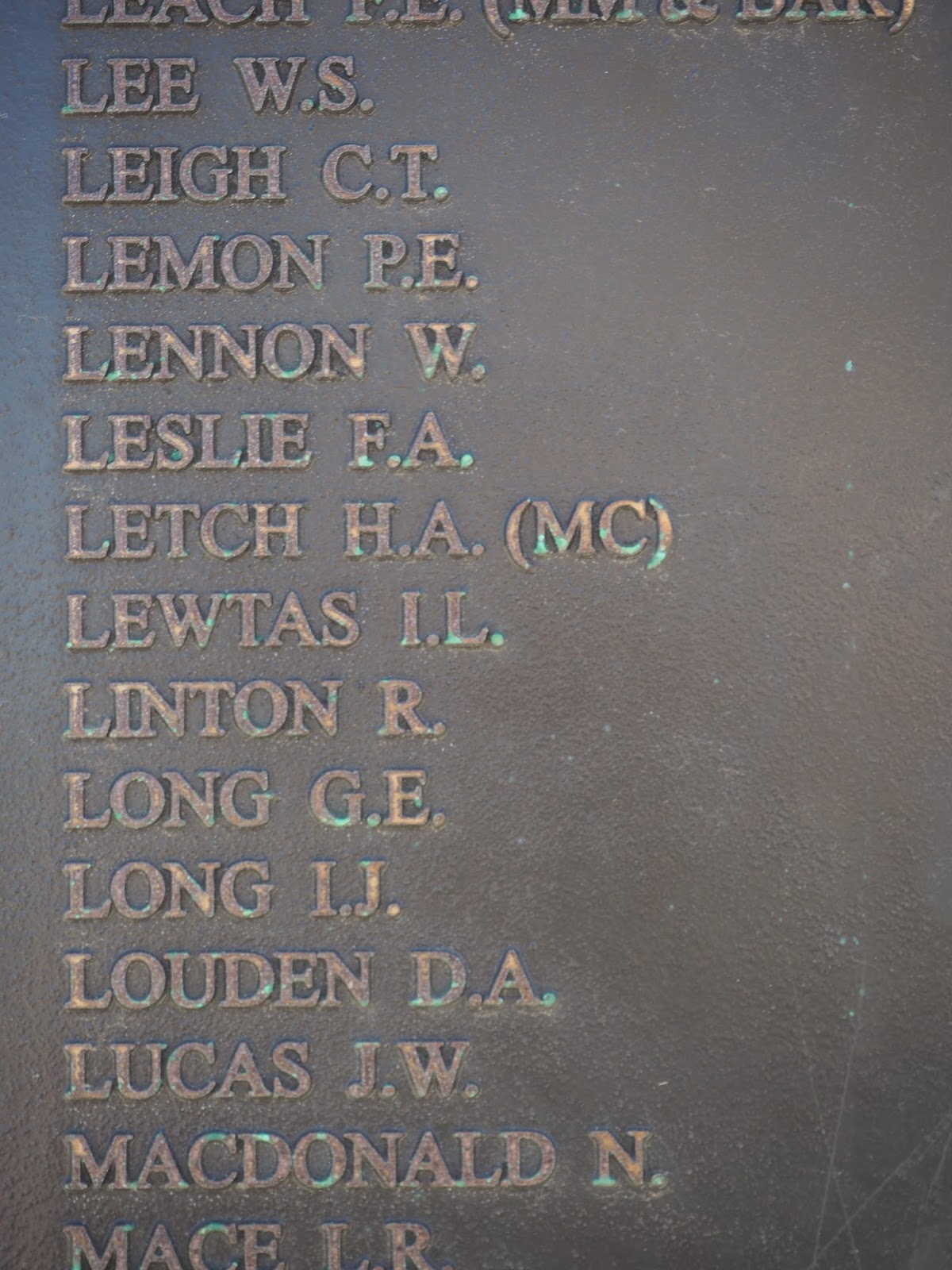
      His name is listed amongst the names on bronze plaques affixed to the Memorial.
      Listing for Colonel R Linton, Bayside War Memorial. Photo Jim Claven 2015.

      To find out more about Colonel Richard Linton and his death and burial on Lemnos, click here.
      Lest we forget

      Jim Claven
      Secretary
      Lemnos Gallipoli Commemorative Committee

      Albert Jacka VC Commemorations St Kilda Cemetery - Sunday 17 January 2015

      Photo Jim Claven 2015

      Today I had the pleasure along with other members of the Committee of attending the commemorative service for Captain Albert Jacka, VC, MC and Bar.
      This was held on the 84th anniversary of his death on 17th January 1932.
      The service was conducted by the City of Port Phillip, with the involvement among others of the RSL Vic Branch, 14th Battalion Association, Jacka's Mob Association, the St Kilda Army and Navy Club, the Hon Michael Danby MP for Melbourne Ports and many members of Albert Jacka's family.
      One of the features of today's commemoration was the playing of an original 14th Battalion bugle.
      It was significant that the program for the event reproduced the picture taken of Albert Jacka while he was on Lemnos in 1915.

      Along with myself, Lambis Englezos, George Petrou and Ange Kenos attended the service.
      Not far from Albert Jacka's grave is the joint grave of Nurse Clarice Daley and Sergeant Ernest Lawrence. Clarice and Ernest were the two Anzacs who were famously married on Lemnos during the Gallipoli campaign. Some of us took the opportunity to visit their grave during the Jacka commemoration. It would be good if a short ceremony at this grave site could be included in future Lemnos Gallipoli commemorations.
      Below are some photos I took of the service:
      Photo Jim Claven 2015
      Photo Jim Claven 2015

      Photo Jim Claven 2015
      Photo Jim Claven 2015
      Photo Jim Claven 2015

      Original 14th Battalion bugle. Photo Jim Claven 2015
      Detail from original 14th Battalion bugle. Photo Jim Claven 2015

      Committee member Ange Kenos at the grave of Lemnos' Nurse Clarice Daley and Sergeant Ernest Lawrence. Photo Jim Claven 2015
      Photo Jim Claven 2015
      Thanks to Lambis to alerting us to this event.

      Jim Claven 
      Secretary 
      Lemnos Gallipoli Commemorative Committee

      Wednesday, 6 January 2016

      Invitation to Albert Jacka Commemoration - St Kilda Cemetery 2.30pm Sunday 17th January 2016

      Albert Jacka, VC, MC and Bar
      Every year the City of Port Phillip commemorate the service of Albert Jacka, VC, MC and Bar - the first Australian soldier to win a Victoria Cross in the First World and a former Mayor of St Kilda on his return to Australia.
      The commemorative service is held on the anniversary of his death. He died on the 17th January 1932. This years event will be the 83rd anniversary of his death.
      This years event will take place at 2.30pm on Sunday 17th January 2016 at St Kilda Cemetery Dandenong Road, St Kilda East. A map of the location can be seen by clicking here.
      You are all welcome to attend.
      Jacka and Lemnos
      For the story of Jacka's link to Lemnos go to our previous post by clicking here.
      An interesting fact is that not far from Albert Jacka's grave at St Kilda Cemetery is the joint grave of former Anzac Nurse Clarice Daley and Sergeant Ernest Lawrence - who both also served on Lemnos in 1915.


      Albert Jacka's grave, St Kilda Cemetery. Jim Claven 2015.
      Albert Jacka - Interesting facts on Jacka’s service and life:
      • Jacka served on Lemnos in 1915 during the Gallipoli campaign, being famously photographed there.
      • He arrived there in April and returned on a number of occasions due to illness and finally came to the Island after the evacuation of the peninsula.
      • While on Lemnos recuperating from illness, Jacka was paraded before military dignitaries.
      • During one of his illnesses, Jacka was cared for by the Australian nurses of the 2nd Australian Stationary Hospital on Lemnos.
      • One of Jacka's comrades was Ernie Hill who would return to Australia and successfully fight for the naming of the new soldier settlement outside of Shepparton as "Lemnos".
      • He was the first Australian to be awarded the Victoria Cross in WWI for his actions on 19 May, 1915, three weeks after arriving at Gallipoli. A massive Turkish offensive to drive the Australian and New Zealand forces off their positions was launched. During this fight a selection of Australian trenches was occupied by the enemy. Jacka organised a party of men to fire on the Turks while he outflanked them. His Victoria Cross citation states that “Jacka at once most gallantly attacked them single-handed and killed the whole party, five by rifle fire and two by the bayonet”.
      • Jacka continued to fight with gallantry and distinction and was awarded the Military Cross for his actions at Pozieres on 7 August, 1916 and received a bar to his MC for bravery at Bullecourt on 8 April, 1917.
      • After being elected as a St Kilda City Councillor in 1929, Jacka fought for his constituents, especially the unemployed, with the same determination he’d shown as a soldier. During his term as Mayor in 1930, Jacka continued to show unwavering support of the needy, who were so deeply affected by the Depression.
      • On 20 January, Jacka was buried with full military honours at St Kilda Cemetery. The ceremony was broadcast on radio and up to 50,000 residents lined the streets to pay their respects.”
      • Jacka Boulevard in St Kilda and the suburb of Jacka in Canberra are both named in his honour.
      Albert Jacka on Lemnos, 1915. AWM
      For the media release on last years service, click here.
      For a media report on last years service, click here.
      Jim Claven
      Secretary
      Lemnos Gallipoli Commemorative Committee