 |
| Bangka Island Memorial, Indonesia, This was unveiled by Vivian Bullwinkel in 1992. |
Our Committee Treasurer Arlene Bennett will today be on Bangka Island, Indonesia, to take part in the commemorative service in honour of the victims of the massacre carried out there on this day 75 years ago by Japanese forces.
The Massacre
The Bangka Island massacre was committed on 16 February 1942, when Imperial Japanese soldiers machine-gunned 22 Australian Army nurses (only one survived - Vivian Bullwinkel) and some 60 Australian and British soldiers and crew members from two sunken ships (only two survived).
 |
| The Vyner Brooke |
On 12 February 1942 the Sarawak royal yacht
Vyner Brooke left Singapore just before the city fell to the Imperial Japanese Army - one of the last evacuation ships to do so.
Although she usually only carried 12 passengers, in addition to her 47 crew, Vyner Brooke sailed south with 181 passengers embarked, most of them women and children. Among the passengers were the last 65 Australian nurses of the Australian Army Nursing Service from the 2/13th Australian General Hospital in Singapore.
Throughout the daylight hours of 13 February
Vyner Brooke laid up in the lee of a small jungle-covered island, but she was attacked late in the afternoon by a Japanese aircraft, fortunately with no serious casualties. At sunset she made a run for the Bangka Strait, heading for Palembang in Sumatra. Prowling Japanese warships, however, impeded her progress and daylight the next day found her dangerously exposed on a flat sea just inside the strait.Not long after 2 pm on the 14 February the
Vyner Brooke was attacked by several Japanese aircraft. Despite evasive action, she was crippled by several bombs and within half an hour rolled over and sunk bow first.
 |
| Drawing from J.E. Simons While History Passed, WHA, 1954 |
Of the 65 Australian nurses embarked upon the
Vyner Brooke, 12 were killed during the air attack or drowned following the sinking (see list below).Approximately 150 survivors - including 22 of the original 65 nurses - eventually made it ashore at Bangka Island, after periods of between eight and 65 hours in the water.
The island had already been occupied by the Japanese and most of the survivors were taken captive.
However, an awful fate awaited many of those that landed on Radji beach. There, survivors from the
Vyner Brooke joined up with another party of civilians and up to 60 Commonwealth servicemen and merchant sailors, who had made it ashore after their own vessels were sunk. After an unsuccessful effort to gain food and assistance from local villagers, a deputation led by an officer of the
Vyner Brooke was sent to contact the Japanese in Muntok, with the aim of having the group taken prisoner.
 |
| Matron Irene Melville Drummond. AWM |
While he was away Matron Irene Melville Drummond suggested that the civilian women and children should leave for Muntok, which they did. The nurses stayed to care for the wounded. They set up a shelter with a large Red Cross sign on it.
At mid-morning the ship’s officer returned with about 20 Japanese soldiers.
They ordered all the wounded men capable of walking to travel around a headland. The nurses heard a quick succession of shots before the Japanese soldiers came back, sat down in front of the women and cleaned their bayonets and rifles.
A Japanese officer ordered the remaining 22 nurses and one British civilian woman to walk into the surf. A machine gun was set up on the beach and when the women were waist deep, they were machine-gunned.
 |
| Sister Lt. Vivian Bullwinkell. AWM |
All but Sister Lt Vivian Bullwinkel were killed.Wounded soldiers left on stretchers were then bayoneted and killed.
Shot in the diaphragm, Bullwinkel lay motionless in the water until the sound of troops had disappeared. She crawled into the bush and lay unconscious for several days.
When she awoke, she encountered Private Patrick Kingsley, a British soldier that had been one of the wounded from the ship, and had been bayoneted by the Japanese soldiers but survived. She dressed his wounds and her own, and then 12 days later they surrendered to the Japanese. Kingsley died before reaching a POW camp, but Bullwinkel spent 3 years in one. She survived the war and gave evidence of the massacre at a war crimes trial in Tokyo in 1947. The names of the 21 nurses who were massacred are listed below.
Of the remaining nurses who survived the Vyner Brooke sinking - 32 became internees, 8 of whom subsequently died before the end of the war (their names are listed below).
Only 24 nurses from the original 65 aboard the Vyner Brooke made it safely back to Australia three and half years later.
 |
| Bangka Island memorial (close up). |
The memorial plaque below is from St Andrews Cathedral in Singapore, where many of the nurses had tended to sick and wounded Allied soldiers prior to the fall of Singapore. It commemorates all 41 Australian nurses who died as a consequence of the fall of Singapore.
 |
| Australian Army Nurses memorial, St Andrews Cathedral, Singapore |
Sources: J E Simons, While History Passed, 1954, AWM, Wikipedia
Lest we forget - The 41 Australian Nurses of the Vyner Brooke
 |
| List reproduced from J.E. Simons While History Passed, WHA, 1954 |
The following nurses were murdered at Radji Beach, Bangka Island (the photographs are sourced from the AWM - thanks to Arlene Bennett for her assistance with research on these nurses):
 |
| Matron I.M. Drummond, Matron 2/13th AGH |
 |
| Sister E.L. Balfour-Ogilvy |
 |
| Sister A.M. Beard |
 |
Sister A.J. Bridge
|
 |
| Sister F.R. Casson |
 |
| Sister M.E. Cuthbertson |
 |
| Sister D.G.H. Elmes |
 |
Sister L.F. Fairweather
|
 |
| Sister P.E. Farmaner |
 |
Sister C.I. Halligan
|
 |
Sister N. Harris
|
 |
Sister M.I. Hodgson
|
 |
| Sister E.L. Keats |
 |
| Sister J. Kerr |
 |
Sister M.E. McGlade
|
 |
Sister K.M. Neuss
|
 |
| Sister F.A. Salmon |
 |
| Sister E.S.J. Stewart |
 |
| Sister M.M.A. Tait |
 |
Sister R.J. Wight
|
 |
| Sister B. Wilmott |
The following Australian nurses were killed as a result of the bombing of the Vyner Brooke (the photographs are sourced from the AWM - thanks to Arlene Bennett for her assistance with research on these nurses):
 |
| Matron Olive Pashke, Matron 2/10th AGH |
 |
| Sister Louvinia Bates |
 |
| Sister Ellinor Colman |
 |
| Sister Dorothea Clarke |
 |
| Sister Hulda Dorsch |
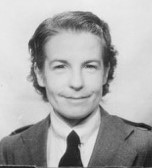 |
| Sister Caroline Ennis |
 |
| Sister-in-charge Kathleen Kinsella, 2/4th CCS |
|
|
|
 |
| Sister Lavinia Russell |
 |
| Sister Marjorie Schuman |
 |
| Sister Annie Merle Trennary |
 |
| Sister Mona Wilton |
 |
| Sister Gladys McDonald |
And let us not forget the one civilian woman (un-named) who chose to remain with her husband, was present when he was butchered nearby and who walked bravely into the water with the nurses.
The 8 other Australian nurses who survived the Vyner Brooke bombing and were interred but died in captivity were:
Sister W Raymont
Sister I Singleton
Sister B Hempstead
Sister D S Gardam
Sister W M Davis
Sister G Hughes
Sister D Freeman
Sister P Mittelheuzer
More information
A good book on the Banka Island massacre is "On Radji Beach" by Ian W. Shaw:
To read more about the Bangka Island massacre, click
here.
To read more about Sister Lt Vivian Bullwinkel, click
here.
To read more about Nurse Irene Drummond, you can go to the biography written by Julie Gorell in 1996 by clicking
here.
To read an article about descendents of the Bangka Island nurses, click
here.
 |
| Arlene Bennett at the Nurse Memorial Centre Memorial to Nurses who served and those who died in WW2. Photo Jim Claven 2015 |
Nurses Memorial Centre
Melbourne's Nurses Memorial Centre (NMC) in St Kilda Road is directly connected to the Bangka Island story. The following background information is sourced from the NMC website:
"It
is a ‘living memorial’ to the heroism and sacrifice of the 77
Australian nurses who died in World War Two or survived years in
prisoner-of-war camps during that time. Two worlds apart the vision of a
living memorial was being formulated, on one side by Edith Hughes-Jones
in Melbourne and on the other side by the nurses in captivity.
Our
founders Vivian Bullwinkel and Betty Jeffery, were first hand survivors
of the war. Vivian was sole survivor, of 22 captured nurses, on of the
Radji Beach massacre on Banka Isand. Betty Jeffrey kept a diary whilst
in captivity and this was published in a book called ‘White Coolies’
which subsequently inspired the film ‘Paradise Road’ directed by Bruce
Beresford to be made. These nurses survived the ordeal of captivity for
three and a half years. Following the sinking of the A.H.S Centaur,
Edith Hughes-Jones began a campaign to raise funds for a “Centaur
Scholarship” and subsequently helped raise funds for the Nurses Memorial
Centre.
Upon their return home after 3 ½ years of captivity, Betty
Jeffrey and Vivian Bullwinkel, with the support of colleagues Wilma
Oram-Young, Colonel Annie Sage, Edith Hughes-Jones , and others, toured
around Victoria in a little Austin car to raise funds for the
establishment of the centre. They visited every hospital in Victoria
with more than 20 beds to explain to their nursing colleagues how they
hoped to make their vision of a living memorial a reality. A living
memorial was not just to remember the passing of the fallen nurses but
continue the ongoing professional development of nurses through
education. A variety of fundraising activities was undertaken to raise
the money needed, and this was the most successful appeal ever held in
Victoria at the time.
Upon their return home after 3 ½ years of
captivity, Betty Jeffrey and Vivian Bullwinkel, with the support of
colleagues Wilma Oram-Young, Colonel Annie Sage, Edith Hughes-Jones ,
and others, toured around Victoria in a little Austin car to raise funds
for the establishment of the centre. They visited every hospital in
Victoria with more than 20 beds to explain to their nursing colleagues
how they hoped to make their vision of a living memorial a reality. A
living memorial was not just to remember the passing of the fallen
nurses but continue the ongoing professional development of nurses
through education. A variety of fundraising activities was undertaken to
raise the money needed, and this was the most successful appeal ever
held in Victoria at the time.
Many nurses have been assisted to
acquire a post-graduate qualifications to improve patient outcomes and
support development of the nursing profession.The Nurses Memorial Centre
also provided accommodation for country and interstate nurses,
educational opportunities, and a venue for many wonderful social
occasions such as the very popular dances. The building may have changed
over the decades but the Nurses Memorial Centre continues to provide
scholarships to support nurses in their career development. We are
fortunate to have the continued support of the relatives of Betty
Jeffrey, Vivian Bullwinkel and Wilma Oram-Young who support the Nurses
Memorial Centre by attending our events and Commemorative Services."
For more information on the Centre, please click
here.NMC and our Committee
The Nurses Memorial Centre has been a strong supporter of the work of the Lemnos Gallipoli Commemoerative Committee, especially our Lemnos Gallipoli Memorial, as a commemorative symbol of the role of trhe Australian nurses in the Gallipoli campaign. They have hosted our Lemnos Gallipoli photographic exhibition as well as presentations on the Lemnos story. We thank them for their continuing support.
We look forward to our Treasurer's return from the service at Banka Island to here more about the commemoration held today.
Jim Claven
Secretary
Lemnos Gallipoli Commemorative Committee


