Help us promote Lemnos' link to Anzac - Make a donation now

Our Committee is raising funds to create a lasting legacy telling the story of Lemnos' link to Gallipoli and Australia's Anzac story. Our projects include the Lemnos Gallipoli Memorial in Albert Park, the publication of a major new historical and pictorial publication and more. To make a donation you can also deposit directly by direct debit into the Committee's bank account: Account Name: Lemnos Gallipoli Commemorative Committee Inc; Bank: Bendigo Bank; Account No: 188010037; BSB No: 633000; Include your surname in the reference section. For further information on our legacy projects or to make a donation please contact either Lee Tarlamis 0411553009 or Jim Claven 0409402388M

Monday, 19 November 2018

Armistice Commemorations in NZ - Courtesy of NZWW100

ARMISTICE CENTENARY NATIONAL CEREMONY
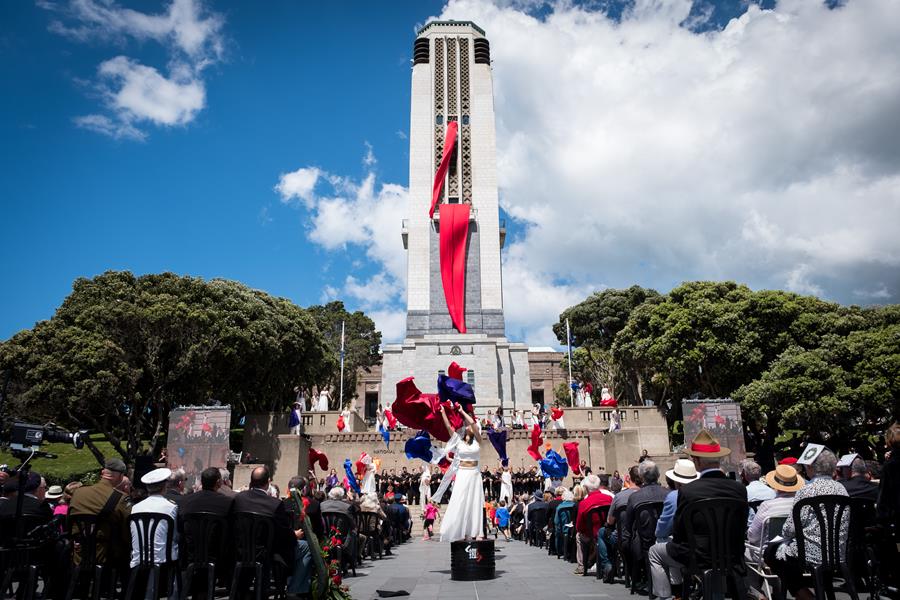
Dancers perform 'He Wawā Waraki: Roaring Chorus 2018' as part of the Armistice Centenary National Ceremony
IMAGE: Dancers performing 'He Wawā Waraki: Roaring Chorus 2018'
After days of wind and rain, the official Armistice centenary events on Sunday 11 November 2018 took place under clear blue skies and brilliant sun at Pukeahu National War Memorial Park.
The National Ceremony held in the morning was attended by a crowd of thousands including the Governor-General Dame Patsy Reddy and Prime Minister Jacinda Ardern, their joint attendance an acknowledgement of the significance of the centenary for New Zealand.
The ceremony began with a 100-Gun Salute fired from the Wellington waterfront and culminated in the specially commissioned creative piece He Wawā Waraki: Roaring Chorus 2018, which was directed by acclaimed choreographer Malia Johnston and featured an original score by composer Eden Mulholland. An interview with Malia Johnston about the inspiration for He Wawā Waraki: Roaring Chorus 2018 can be viewed here.
The Armistice Beacon stood alongside the park's memorials, broadcasting messages of peace, hope and remembrance into Pukeahu from people all around the world.
In the evening the New Zealand Defence Force led the Sunset Ceremony, which incorporated the final daily Last Post Ceremony, ending the commemorative events programme for the First World War Centenary.
The day's events paid homage to the immense loss endured by so many throughout the First World War, while also recapturing the celebration of peace and hope that swept many parts of New Zealand at the war's end 100 years ago.
Both the Armistice Centenary National Ceremony and the Sunset Ceremony can be viewed online on the WW100 YouTube channel and photos can be found on the WW100 website and the WW100 Facebook page. 
This Stuff report presents a short video about the Armistice Centenary National Ceremony and also looks at Armistice commemorations in Christchurch, Auckland, Waikato and Nelson.

ARMISTICE COMMEMORATIONS AROUND AOTEAROA
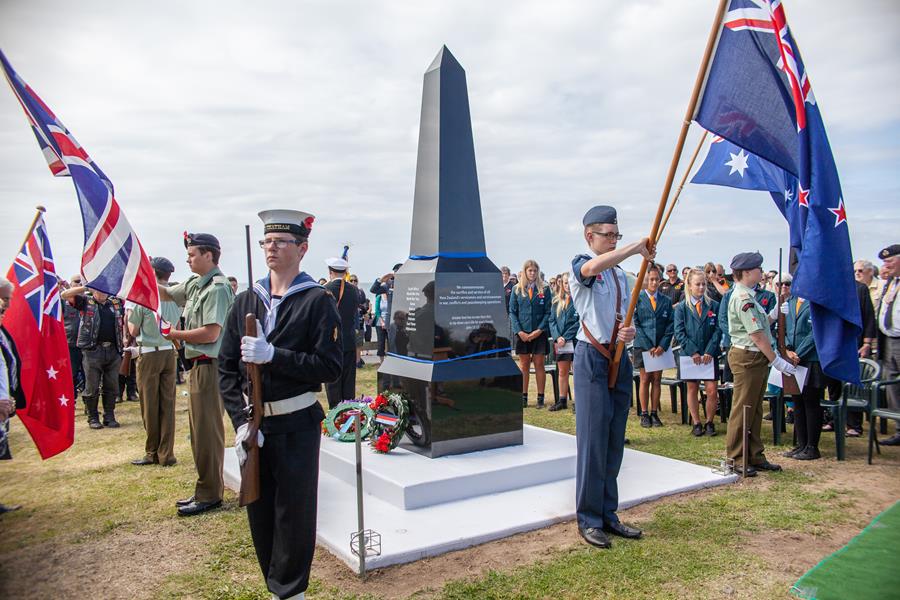
The unveiling of Papamoa's new war memorial on 11 November 2018
IMAGE: The unveiling of Papamoa's new war memorial on Sunday 11 November 2018. Image supplied by Michael O'Carroll
The morning of Sunday 11 November 2018 saw communities mark the Armistice centenary across New Zealand. Following the two-minute silence of remembrance at 11am, many joined the Roaring Chorus which echoed the relief and noisy celebration that rang out across the country 100 years ago when news of the Armistice reached our shores.
This video montage of footage and images from Fire and Emergency New Zealand shows stations, brigades and fire forces taking part in the Roaring Chorus.
The media coverage below is just a sample of the many stories published online about the Armistice centenary. They provide an insight into commemorative activities across New Zealand and the experiences of those who lived to see the end of the First World War. 
Station Services Manager Maddy Bellcroft delivers a speech during Armistice commemorations at McMurdo Station, Antarctica. Image provided by Megan Martin.
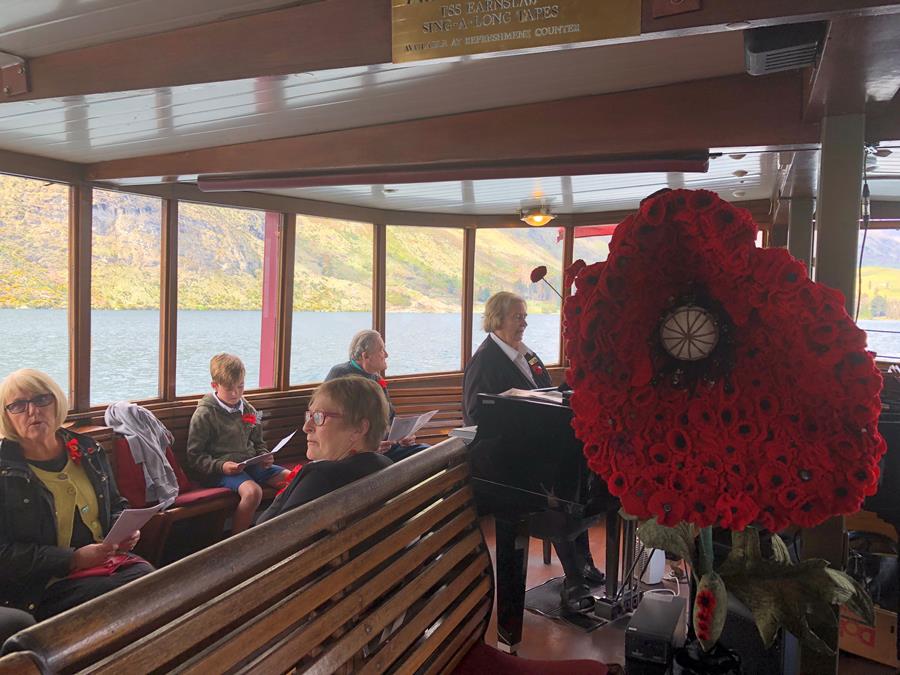
At 11.02am the TSS Earnslaw sounded its horn on Lake Wakatipu and pianist Eleanor Muir led passengers in the national anthem and old war songs. Image provided by Tsehai Tiffen.
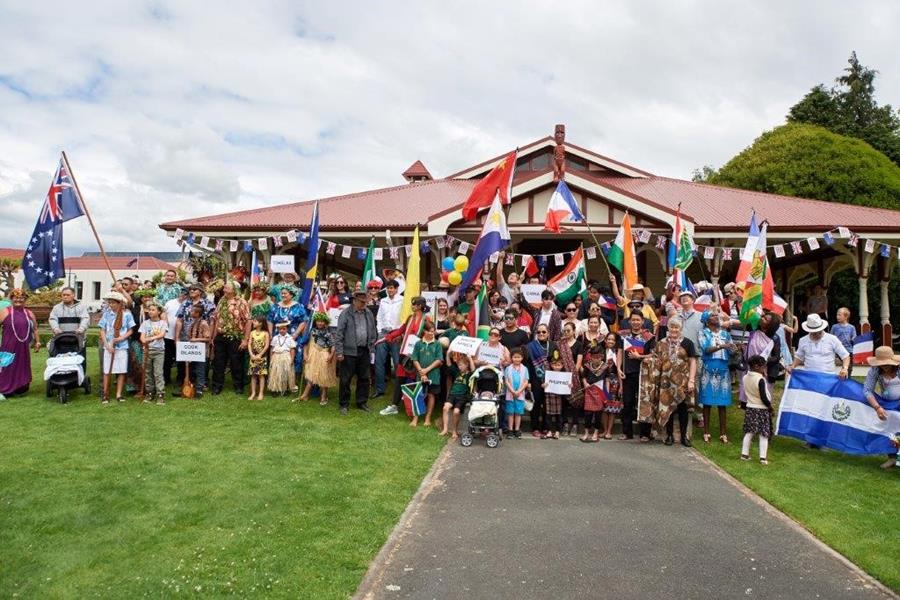
For the Armistice commemoration organised by Lakes District Council in Rotorua's Government Gardens, the Rotorua Multicultural Council contributed a Parade of Nations. Image provided by Margriet Theron.
IMAGES TOP TO BOTTOM: Station Services Manager Maddy Bellcroft delivers a speech during Armistice commemorations at McMurdo Station, Antarctica. Image provided by Megan Martin.
At 11.02am the TSS Earnslaw sounded its horn on Lake Wakatipu and pianist Eleanor Muir led passengers in the national anthem and old war songs. Image provided by Tsehai Tiffen.
For the Armistice commemoration organised by Lakes District Council in Rotorua's Government Gardens, the Rotorua Multicultural Council contributed a Parade of Nations. Image provided by Margriet Theron.

FINDING OUR WAY BACK
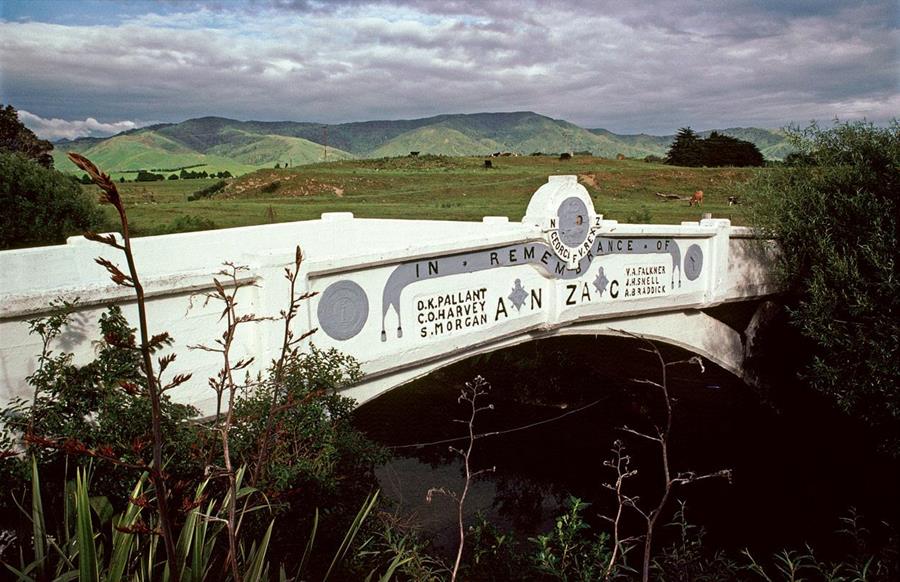
One of New Zealand's three war memorial bridges, opened in 1922 at Kaiparoro in the northern Wairarapa
IMAGE: Opened in 1922, this concrete bridge at Kaiparoro in the northern Wairarapa is one of the country's three First World War memorial bridges. Image courtesy of Jock Phillips and Chris Maclean.
New Zealand soldiers were not able to return home immediately following the Armistice of 1918, due to a shortage of ships, and the need for personnel for the occupation of Germany. For many, the return took over ten months, well into 1919.
WW100, New Zealand's First World War commemoration programme, will continue into mid-2019 as we explore the journey back for service men and women and the return to a peacetime society.
The WW100 website and social media pages will continue to be regularly updated and any activities or events related to the centenary of the First World War can still be added to our website

Sunday, 18 November 2018

Lemnos' Role Honoured at Heidelberg Repatriation Hospital's New Murals

On 13th November 2018 Austin Health unveiled a collection of three 5m x 1.2m mosaics in honour of our World War (WW) I and II veterans. The artworks particularly recognise Indigenous soldiers from the Gunditjmara tribe as well as Australian nurses Grace Wilson (WWI) and Lemnos, Vivian Bullwinkel (WWII) who served during the wars. The artworks will add to the significant collection of war artefacts and heritage works on display at Heidelberg Repatriation Hospital.

I was honoured to participate in the unveiling of the first mosaic of Grace Wilson and Lemnos on behalf of the Lemnos Gallipoli Commemorative Committee along with family members of Grace Wilson and Melbourne Legacy Community Services Manager Ken Tsirigotis.
 

 It’s wonderful to see the nurses taking pride of place at the entrance and for the role of indigenous soldiers to be acknowledged. It was also a fantastic turnout including by a large number of children from local schools as well as Arlene Bennett from our Committee and the Nurses Memorial Centre, the State Member for Ivanhoe Anthony Carbines MP and Labor Candidate for Jaga Jaga Kate Thwaites.
Congratulations to all those involved in making this permanent tribute a reality including Austin Health - Heidelberg Repatriation Hospital and the artist.
Other photos from the unveiling are reproduced below:


Lee Tarlamis
President
Lemnos Gallipoli Commemorative Committee

New Olive Tree for Lemnos Square

Photo Sandra Khazam October 2018

Great news from Albert Park's Lemnos Square.
A key part of our commemorative installation at Lemnos Square in Albert Park was the olive tree. This combined with our Lemnos Gallipoli Memorial, flag poles and information boards to complete our commemoration of the Hellenic link to Australia's - and Port Phillip's - Gallipoli story.
Photo Jim Claven  2017

Some of our members and supporters may have noticed recently that our lovely olive tree at Lemnos Square had sustained serious damage. We don't know what happened but it would appear that someone unknown had damaged the tree and "severely pruned" it - for want of a better word.
Photo Jim Claven August 2018
Our Committee alerted Port Phillip Council to the damage and the great news is that they have replaced the Olive Tree. The tree is now protected too.
A big thank you to all at Port Phillip Council, including Sandra Khazam, for their excellent and timely work in restoring this important component of Lemnos Square.

Jim Claven
Secretary
Lemnos Gallipoli Commemorative Committee

Wednesday, 14 November 2018

First World War Aussie Banter - C.J. Dennis' Digger Smith Glossary


I was reading C.J. Dennis' famous book "Digger Smith" published by Angus and Robertson in 1918 and noticed that it includes a glossary of common terms that "the Digger" uses. They contain many phrases commonly used at the time and are reproduced below. One of my favourites is the word "cove" meaning a bloke.

Jim Claven
Secretary
Lemnos Gallipoli Commemorative Committee


Monday, 12 November 2018

Hellenic Anzac Story and the re-development of NSW War Memorial

NSW War Memorial, Sydney. Photo Jim Claven 2015
The NSW War Memorial is one of Australia's most important and moving commemorative sites. The impressive architecture of the building includes an army nurse and the excellent display, elements from the Greek campaign of 1941.

Photo Jim Claven 2015

Photo Jim Claven 2015.

This year witnessed the refurbishment of the NSW War Memorial, including the inclusion of soil from battlefields across the world (including the important battles at Vevi Pass, Tempe Gorge, Cape Spada and Retimo during the Greek and Crete campaigns of 1941) and the loan of a 2,500 Corinthian Grecian Urn (in the AWM's Collection - ART 30402) for display in the Memorial.
We congratulate the work of the NSW-based Joint Committee for the Commemoration of the Battle of Crete & The Greek Campaign in these developments and urge anyone visiting Sydney to take the time to visit the new displays at the NSW War Memorial.
It is fantastic that the battlefields such as Vevi, Tempe, Retimo and Cape Spada have been honoured in this way. Well done.
Jim Claven, Secretary, Lemnos Gallipoli Commemorative Committee
The following information has been provided by Nick Andriotakis BE (Hons), the Secretary of the NSW-based Joint Committee for the Commemoration of the Battle of Crete & The Greek Campaign.


Dear Friends
Yesterday was Remembrance Day and 100 years since the signing of the Armistice which resulted in the end of the First World War also known as the “ Great War.” I would like to bring to your attention for reflection two outstanding Australians (see also attachments) both born in Greece who served Australia in the Great War . They were amongst nearly 2,500 Australians of Greek heritage who served Australia in both World Wars.
Nicholas Rodakis
Sergeant Nicholas Rodakis MM, DSC (US), AIF was born in Athens in 1880 and enlisted in the First AIF in February 1916. He fought in the Western Front and was attached to a United States army unit, and in September 1918, Rodakis’ platoon was cut off behind enemy lines. As the unit fought to survive, Rodakis rescued an American officer in no-man’s-land before capturing a German machine gun. He then defended his position for hours, before returning to the allied lines under cover of darkness, picking up wounded as he went. For his actions, Rodakis was awarded the United States Distinguished Service Cross - the American equivalent of the Victoria Cross.
Download a summary of Constantine's service by clicking here.
Constantine Aroney
Constantine Aroney was born in Kythera in 1893 and at the turn of turn of the 20th Century he came to Australia and was living in Melbourne . He served Australia in both World Wars, first enlisting in the First Australian Infantry Force in 1915 at age 20 years and 11 months. He served as a private in the First Anzac campaign at Gallipoli and then onto France and Belgium part of the 24th Battalion. In October 1939, he enlisted in the Commonwealth Military Forces and seven months later he transferred to the 2nd Australian Imperial Forces , serving in the second Anzac Campaign in Greece and Crete as well as Syria Palestine and , North Africa. Hence Constantine Aroney was a rare “Dual Anzac.” While serving in Greece, Aroney’s cultural background proved extremely valuable with his knowledge of the Greek language and customs . Following the debacle on mainland Greece, when the Allied forces were overrun by the German Army, Aroney managed to escape to Crete in an open boat, taking 23 Anzacs with him, whom he cared for with the help of Greeks on Crete – a heroic feat for which he was awarded the British Empire Medal.
Download a summary of Constantine's service by clicking here.
Yesterday was also the official opening to the public of the NSW Anzac Memorial Anzac Centenary Extension which realised architect Bruce Dellit’s original concept for the Memorial . Dellit had originally envisioned two water features running on a north-south axis to the Memorial, but due to the impact of the Great Depression only the Pool of Reflection north of the Memorial was ever built. Now a contemporary interpretation of the water cascade on the southern side of the Memorial , a symbol of hope for future generations, completes the original 1930s concept design. A walkway through the Cascade allows Memorial visitors to enter the new Hall of Service, exhibition galleries and education facilities, providing a contemporary understanding of the history and impact of conflict.
Included in these extensions is The Oculus, which is centred above the Hall of Service and is an architectural reference to the Well of Contemplation in the existing Hall of Memory and visually connects the two. Beneath the Oculus lies soil collected (where possible) from 100 battle sites of significance to NSW military history set into a ring in the floor.
Four of those soils have been collected from Greece - Vevi Pass , Tempe Gorge , Cape Spada and Retimo and are included in the ring on the floor.
Photos supplied by Nick Andriotakis:


Located at the heart of the Anzac Memorial is a bronze sculpture of the fallen warrior . The sculpture “ Sacrifice “ is based on the story of the Spartans from ancient Greece who were raised as warriors and were told to come home with their shield , or on it - a warning to be victorious or die. Rayner Hoff created an image that depicts the weight of the dead young warrior carried on his shield by his mother, sister and wife nursing infant child. The sculpture uses the Spartan Warrior analogy being returned to his loved ones dead on his shield to evoke the emotion experienced by the families of the young men who died in the Great War 1914-18.
In 2017 in cooperation with the NSW Anzac Memorial a submission by The Joint Committee for the Commemoration of the Battle of Crete and the Greek Campaign and the Consul General of Greece in Sydney was made to the Australian War Memorial to loan to the NSW Anzac Memorial for display in the new extensions a 2,500 Corinthian Grecian Urn (ART 30402) held by the AWM .

The following is an extract from our submission to Dr Brendan Nelson , Director of the Australian War Memorial
“The Greek soil holds 1944 Anzacs from both campaigns of which 795 are Australians and nearly half of these were never found or their remains identified. The Greek soil also holds the ancestors of the Greek Australian community and so the Anzac legacy is forever intertwined between the two countries. In 1946 a 2,500 years old Greek Corinthian urn was donated by Greece to Australia and was presented to Prime Minister Chifley. The urn contained soil from the graves of Australians buried in the cemetery at Phaleron outside Athens. This was the first time in history that Greece had presented Greek soil to a foreign country. In a letter to the Prime Minister of Australia, the Prime Minister of Greece stated: “The Greek people will always remember with deep emotion the unparalleled heroism of the Australian soldiers, who, in the dark hours of our recent history, fought against the common enemy in Greece and Crete in comradeship with our soldiers. The Australian soldiers who are buried in Greece are the everlasting symbol of the friendship between our two countries and of the heroic contribution of Australia in the struggle for liberty and justice”
Dr Nelson acknowledged the importance of the Grecian Urn and agreed to loan it to the NSW Anzac Memorial . Below is an extract from his email to myself and the Consul General
“The connections between Australia and Greece that grew out of the Greek Campaign and the Battle of Crete are undoubtedly of great importance to both countries and particularly to the large Greek-Australian community here in Australia. I am delighted to hear that the Anzac Memorial will be including soil from four sites in Greece in their Hall of Service, I am sure that this will indeed strengthen the connection between our peoples.
Thank you for your interest in deepening the bonds between our two countries and sharing the story of Australian and Greek service and sacrifice together in the Second World War with the wider community."

The Grecian Urn is now on display at the NSW Anzac Memorial at the beginning of the exhibition galleries .
You may view photos of the Greek soils and the Grecian Urn in the link below but more importantly I encourage you all to take your friends and family to view both at the outstanding refurbished NSW Anzac Memorial in Hyde Park , Sydney .

Regards
Nick Andriotakis BE (Hons),
Secretary ,
Joint Committee for the
Commemoration of the Battle of Crete & The Greek Campaign


Saturday, 10 November 2018

Remembrance Day 2018 at the Oakleigh Cenotaph

The Lemnos Gallipoli Commemorative Committee was invited by the Oakleigh-Carnegie RSL Sub-Branch to take part in their service held to commemorate Armistice Day 1918.
The service included a catafalque party (members of the Great War Re-enactment Society), the Oakliegh Band and wreath laying.
A very good speech was given by Oakleigh-Carnegie RSL President, Mr Douglas Pendergast. In his address Douglas pointed out that the Oakleigh District contributed one of the highest enlistments for WW1, with 10% of the then population of 4,800 joining up into the Australian Imperial Force. General John Monash praised the community for the service of its volunteers when he attended a fundraiser for the planned cenotaph in the 1920's. It was good to hear Douglas acknowledge the role of Lemnos and the Australian nurses who served there in his address.
The service was well attended with many members of the community, parliamentary, local government, local school and police attending. I was personally happy to meet visitors from my birthplace of Glasgow, one of whom was a service woman. I was wearing the medals of my maternal grandfather, Corporal John Dunnion who served on the Western Front with the Kings Own Scottish Borderers.
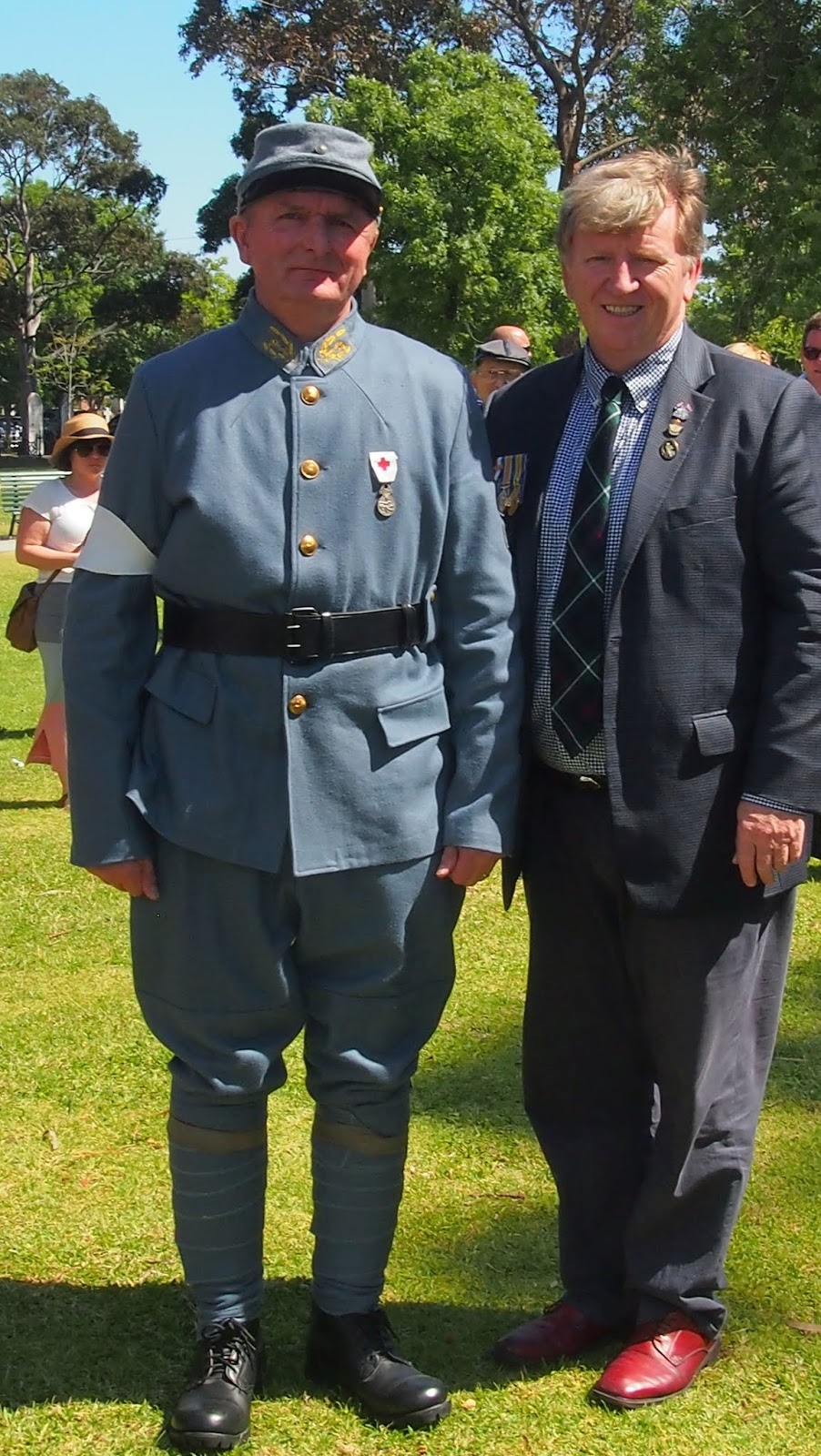
One feature of the service was the recognition of the role of France in WW1.

The Great War Re-enactment Society also expressed an interest in participating in the Lemnos Gallipoli Commemorative Committee events - watch this space.
Our President Lee Tarlamis OAM and myself laid the wreath on behalf of our Committee. A number of members were also able to attend, including Mr John Salpigtidis and Mr Nikolaos Kydas.
The Oakleigh-Carnegie RSL has been a supporter of the work of our Committee for many years. Thanks to Douglas Pendergast, Ann and Jim Barker and all at the RSL for the invitation to participate in their great service.
Photos from the service are reproduced below:

Photo Nik Kydas 2018
Cr Tony Athanasopoulos (Glen Eira CC), Douglas Pendergast, Steve Dimopoulos MP for Oakleigh, myself and Lee Tarlamis OAM.
Myself. Committee member John Salpigitidis and Lee Tarlamis OAM.
Myself, Lee Tarlamis OAM and Cr Paul Klisaris (Mayor of Monash CC).
Photo Nik Kydas 2018


Jim Claven
Secretary
Lemnos Gallipoli Commemorative Committee